Showing posts with label Hyundai. Show all posts

Saturday, January 22, 2011

Hyundai targets Chinese mid-sized car market (CN)


Following its extraordinary success in the U.S, according to a senior executive, Hyundai is aiming for its long lasting growth to come from China.

“It is time to strengthen our brand’s premium image in China to pave the way for our long-term growth there,” Jung Myung-Chae, GM at Beijing Hyundai Motor’s brand strategy division said.

Despite Hyundai arriving late in the Chinese market, it’s the 4th largest manufacture in the country. The line-up consists of a mixture of vehicles from emerging markets and the North American market, however, the most popular model was the Elantra compact sedan.


2010 saw Hyundai drop off 700,000 cars, with a majority of vehicles being compact sedans with a small engine displacement.

Myung-Chae said Hyundai will now concentrate on larger vehicles and in order to keep up with local demand, the brand has assembled its third Chinese plant.

“As part of our global brand strategy, we want to focus more on the mid-sized sedan segment this year,” Jung said.

Thursday, November 11, 2010

SEMA 2010: Hyundai Genesis Coupe


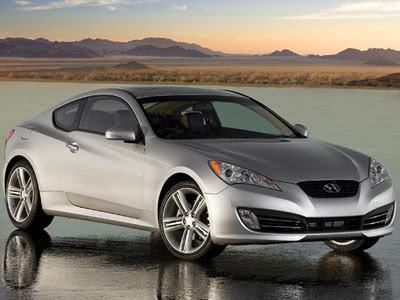
The Hyundai Genesis Coupe is a tuner favorite at SEMA. GogoGear showed off its racing Genesis Coupe, while ARK Performance has created a performance Genesis Coupe more appropriate for cruising the Vegas Strip. There's even a bit of overlap between the two, as GogoGear's entry uses a carbon fiber bodykit, headers, shocks and coilovers from ARK Performance. Getting the rest of the coupe ready for kerbs are the upgraded V6 churning out 380 horsepower, carbon fiber roof, 18-inch Konig Kilogram lightweight wheels and a Racepak IQ3 data logger dash.

ARK Performance went street with a carbon grille, hood and rear diffuser, with ARK SFX bumpers, skirts and fenders. Stoptech brakes scrub the speed, and Alpine, Apple and Infinity provide the audiovisual buffet in the cabin. JsDesigns can be thanked for the little guy on the hood, and his rear is warmed by the heat of a supercharged 3.8-liter, 585-hp engine with 330 pound-feet and dual headers and downpipes.

Tuesday, October 19, 2010

2011 Hyundai Sonata Hybrid

2011 Hyundai Sonata Hybrid


Competitors:
Honda Accord and Toyota Camry

Engine: V6-equipped 2.0 and 2.4-liter engine

Mileage: 36 mpg in the city and 40 mpg on the highway


http://www.sportscarsfans.com/images/script/image.php?id=9DA4_4CBDEA2A

Other Info: Sonata is a sedan that has always shown up with the kind of styling, efficiency and price this low which make consumers to scurry for their checkbook.

All new 2011 Sonata can also be driven in all electric mode. Hyundai says that the Sonata Hybrid can cruise on all-electric at speed of up to 62 mph, and company's engineer indicated that the car might do even better. Hyundai did this by converting its 2.4-liter four-cylinder engine to the Atkinson Cycle and added a 40-horsepower electric motor, which is good for a combined 206 horsepower and 193 pound-feet of torque, but the main thing is the car's battery pack.

Instead of cull out the cheaper nickel-metal hydride cells, Hyundai's choice was costlier lithium-polymer cells with a total of 72 cells into the pack, which weighs a relatively 96 pounds.


http://www.sportscarsfans.com/images/script/image.php?id=FE5D_4CBDEA2A

Friday, October 8, 2010

Paris 2010: Hyundai teams up with Brabus for sportier i20

Hyundai i20 Sport Edition

After a 2008 introduction, the Hyundai i20 is back at the Paris Motor Show but this time it's got a bit of an attitude. Hyundai has teamed up with Brabus to create the i20 Sport Edition. So far the only details released involve the appearance changes. The front skirt and wheel arches take on an angrier appearance while Yokohama rubber gets wrapped around a set of 17-inch Brabus alloy wheels. The black mesh looks good next to the black bezel around the headlights, as well as the added LED daytime running strips.

While the outside sports that subtly-cool hot-hatch look, the inside looks it was "designed" by the Great Pumpkin after a night spent throwing one too many back. Though the orange-black paint scheme is a little much, the sporty Recaro seats, leather-lined surfaces and seven-inch touchscreen are welcome additions.

We're still waiting to hear what is powering the Hyundai i20 Sport Edition, but with Brabus involved we can only hope for the best. The car will enter production during the first half of 2011, and it will be released as a limited-edition model, available in both three and five-door versions

Thursday, October 7, 2010

Paris 2010: 2011 Hyundai ix20 is neat, nifty, compact

2011 Hyundai ix20

Hyundai's fluidic design language makes a little car quite handsome, and the ix20 MPV at the Paris Motor Show is the latest to benefit from the rhinoplasty. To our American eyes, it's a tiny piece of kit to be called an MPV, but the market for European B-segment people-carriers is robust.

Aimed at Continental families, the wheels pushed out to the corners provides a pleasantly roomy interior for a car with its dimensions. Four powerplants can be placed under the hood, two gas engines and two oil-burners ranging from 75 to 122 horsepower. Hyundai has also found room for plenty of safety features, with ESP, ABS, and Hill Start Assist making the list of standard kit.

Hyundai is hoping any further worries will be allayed by the five-year, unlimited mile warranty, and wants to sell 55,000 units of the ix20 annually.

Wednesday, June 23, 2010

Hyundai: Sonata 2.0 Turbo hits 60 in 6.5 seconds, returns 34 mpg highway

2011 Hyundai Sonata Turbo

According to Hyundai, its new 274-horsepower 2.0-liter turbocharged engine for the 2011 Sonata sedan is going to be a real gem. To wit, the Korean automaker says the boosted-four will propel its midsize sedan to 60 miles per hour in just 6.5 seconds. That's serious speed for the segment and it means the Sonata will at least have the accelerative chops to stick with the rest of the sport sedan competition.

Of course, these days frugality is just as important as horsepower, and Hyundai assures us that its 2.0T-powered Sonata will be able to return the promised 22 miles per gallon in the city and 34 on the highway – all on regular-grade fuel. For those who like to keep track of such things, Hyundai claims those figures are 16% and 17% better respectively than the outgoing 3.5-liter V6.

Want more? Well, that's all we can share for now... but our initial driving impressions will be on their way just as soon as Hyundai gives the word. Stay tuned.

[Source: Hyundai]

Friday, May 21, 2010

2011 Hyundai Sonata Midsize Sports Sedan

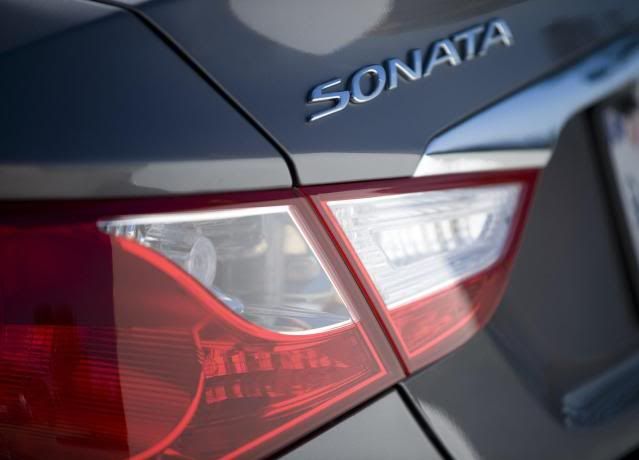
Hyundai introduced its all-new 2011 Hyundai Sonata at the 2009 Los Angeles Auto Show. This marked the North American debut of the latest version of the popular midsize sedan, introducing Hyundai's "Fluidic Sculpture" design language and an all four-cylinder engine lineup to the U.S. market. Hyundai Sonata is the second vehicle in Hyundai's 24/7 version 2.0 product initiative (seven new models in the next 24 months) following on the heels of the all-new Tucson. Production of Hyundai Sonata will begin in December 2009 at Hyundai's U.S. plant in Alabama with retail sales beginning in January 2010.
2011 Hyundai Sonata Midsize Sports Sedan
The new Sonata will launch with Hyundai's new Theta II GDI 2.4-liter four-cylinder engine with a Gasoline Direct-Injection (GDI) fuel delivery system, which contributes to improved fuel efficiency and lower emissions. Hyundai Sonata is the first midsize sedan to adopt GDI technology as standard equipment in a naturally aspirated powertain. This shorter, more direct path of fuel delivery, allows for greater control of the fuel mixture at the optimum moment, thus improving efficiency. The fuel is injected by a camshaft-driven, high pressure pump that operates at pressures up to 2,175 psi. Direct injection also utilizes a higher than normal 11.3:1 compression ratio for increased power. The pistons are "dished" to increase combustion efficiency in the cylinder. This powerplant will deliver best-in-class fuel economy, best-in-class four-cylinder horsepower and best-in-class torque.
The Sonata 2.0T, as the car is officially named, is powered by a new 2.0-liter Theta II twin-scroll turbocharged gasoline direct-injection (GDI) engine that produces 274 horsepower at 6,000 rpm and 269 lb-ft of torque from 1800-4500 rpm with regular fuel. The engine is linked to a six-speed automatic transmission with SHIFTRONIC manual control that drives the front wheels. No performance figures were released but Hyundai did announce that the Sonata 2.0T will deliver an estimated 22 mpg (10.7lt/100km) city and 34 mpg (6.9lt/100km) highway.
The 2.0-liter twin-scroll turbo engine will be available on the Sonata SE and Limited trim level, with the Limited getting additional upgrades, including a panoramic sunroof, 18-inch "hyper" silver alloy wheels, dual exhaust system and steering wheel-mounted paddle shifters.
Next year, Hyundai will add a 2.0-liter Theta II turbocharged GDI four-cylinder engine and a 2.4-liter Hybrid Blue Drive model featuring Hyundai's breakthrough lithium polymer battery pack. Details about these powertrains will be announced at the 2010 New York Auto Show. Hyundai Sonata's innovative segment first powertrain lineup is a key driver of Hyundai's goal to be the most fuel-efficient automaker on the planet.
Hyundai's commitment to making the Hyundai Sonata extremely fuel efficient continues with a six-speed automatic transmission with SHIFTRONIC manual control or a standard six-speed manual transaxle. Hyundai's all-new six-speed automatic A6MF2 transaxle helps the company meet its goals of improving fuel efficiency and reducing emissions. Shifts are silky-smooth with an option of manual control through the SHIFTRONIC feature.
Developed over a four-year period, this new six-speed automatic is 26.4 pounds lighter than the five-speed it replaces. It also is 1.6 inches shorter and considerably simpler, having 62 fewer parts, which is a key to increased durability, lighter weight and lower cost. When it comes to transmissions, more gears are definitely better. The addition of a sixth gear enables closer spacing between gear ratios providing a better balance of performance and fuel economy while the wide overall gear ratio helps deliver strong acceleration.
All Sonatas have column-mounted, motor-driven electric power steering that adjusts instantly to changing driving conditions while improving fuel economy over a conventional steering system. A quick-ratio steering rack is used for crisp feel on turn-in. Hyundai Sonata's turning diameter of 35.8 feet is better than Camry, Accord, Altima, Fusion and Malibu.
One of the program targets for the 2011 Sonata engineering team was world-class power-to-weight ratio. Power-to-weight ratio pays dividends in both performance and fuel economy. Hyundai Sonata is rich in ultra-high-strength steel, leading to world-class body rigidity. The 2011 Hyundai Sonata is 25 percent stiffer in torsion and 19 percent stiffer in bending rigidity than its predecessor, yet it is lighter than many midsize sedans, also offering more interior room.
The 2011 Sonata is a smart combination of superior styling, performance, safety and fuel efficiency. What’s more, it’s an affordable midsize car, putting a luxurious and rewarding driving experience within reach of many. Make the 2011 Sonata a part of your future.

Tuesday, May 11, 2010

2011 New Hyundai Avante Sports Sedan

Hyundai Motor Co. had its world-premier of the all-new Hyundai Avante compact Sports sedan, the company's best-selling model worldwide, at the 2010 Busan International Motor Show. The fresh 2011 new Hyundai Avante, badged because Hyundai Elantra in commercialises largest Korea comes on Hyundai’s latest 1.6L Gamma gas Direct Injection locomotive and a 6-speed automatic drive to the front-wheel drive compact, the 1st time GDI and six-speed automatic rifle have been boasted on a contract sedan in Korea.
2011 Hyundai Avante
The fresh Avante delivers a peak end product of 140ps and level best torque of 17.0kg-m. They are also almost 10 percent a lot fuel efficient than thems closest challengers, cheers to GDI, the six accelerate automatic and additional fuel economy sweetenings.The fresh Hyundai Avante will enchant and surprise on a raft of additional advanced characteristics not found on additional compacts, admitting HID (High Intensity Discharge) headlights, LED compounding lamps in the back, heated back end seats, puddle lamps and a color in TFT LCD entropy display nestled in the caliber cluster.
"The new Hyundai Avante encompasses Hyundai's latest ambitions, featuring the best styling and performance in its class," Steve S. Yang, President & CEO of Hyundai's Global Business Division, said at the Busan Exhibition and Convention Center (BEXCO) today. "We're confident that it will once again redefine the compact segment worldwide."
With sportier and even more elegant lines than its predecessor, the new Hyundai Avante - badged as Elantra in markets outside Korea - continues Hyundai's 'fluidic sculpture' design philosophy.
Hyundai has applied its latest 1.6L Gamma Gasoline Direct Injection engine and a 6-speed automatic transmission to the front-wheel drive compact, the first time GDI and six-speed automatic have been featured on a compact sedan in Korea. The new Avante delivers a peak output of 140ps and maximum torque of 17.0kg•m. It is also about 10 percent more fuel efficient than its closest competitors, thanks to GDI, the six speed automatic and other fuel economy enhancements.
The new Hyundai Avante will delight and surprise with a raft of other advanced features not found on other compacts, including HID (High Intensity Discharge) headlamps, LED combination lamps in the rear, heated rear seats, puddle lamps and a color TFT LCD information display nestled in the gauge cluster.
Under the Avante/Elantra badge, Hyundai has sold over 6 million units worldwide since the car's launch in 1990. Hyundai will begin sales of the all-new Hyundai Avante in the second half of 2010 in Korea.

Wednesday, April 28, 2010

Beijing 2010: 2011 Hyundai Accent debuts as Verna across the Pacific

Hyundai Verna


Hyundai's fluidic sculpture design language has now spread to the smallest vehicle in its lineup, and the new sub-compact slated to take the place of the aging Accent was unwrapped on the floor of the Beijing Motor Show. We've been seeing spy shots of the next generation Accent for some time and it very clearly follows the same design path as its big brother the Sonata.

The little sedan, badged the Verna outside the U.S., has the same rounded coupe-like greenhouse and rising crease up the sides. Inside the Verna/Accent definitely has a more attractive, higher-quality feel than the current model, although calling it up-scale would be slightly disingenuous. We'll have to wait and see what kind materials the North American model gets before making a decision.

Power is slated to come from either a 1.4- or 1.6-liter inline-four, producing 106 horsepower and 120 hp, respectively, with a standard five-speed manual gearbox or four-speed automatic. Expect the U.S. version to come packing the larger four-pot when it goes on sale early next year.

Wednesday, April 21, 2010

Kia Forte awarded IIHS 'Top Safety Pick'

2010 Kia Forte sedan


Much like parent company Hyundai, Kia has been working hard to revive its brand image. New products like the Soul and Forte have been relatively well received so far, and with new stunners like the 2011 Sportage and Optima on the way, Kia should benefit from a healthy boost in sales. But strip away the sleek new designs and clever interior packaging, and you'll find that Kia's core value of crafting extremely safe vehicles is still holding strong, especially now that the 2010 Forte sedan has been named a Top Safety Pick by the Insurance Institute for Highway Safety.

The Forte received ratings of "Good" (the highest achievable) in front, side, rear and rollover impact crash tests – something that safety-minded buyers will surely appreciate. What's more, this gives the Forte more ammo to compete head on with the Honda Civic and Toyota Corolla, its two main competitors, which have also been dubbed as Top Safety Picks by IIHS. Curiously, only the sedan was mentioned in the IIHS study, so we can't say if this prestigious honor carries over to the two-door coupe Koup.

Friday, March 12, 2010

2010 Hyundai i-Flow Concept Diesel-Electric Hybrid Powertrain

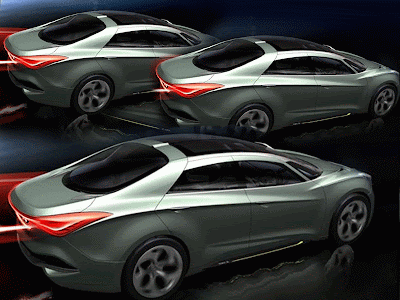
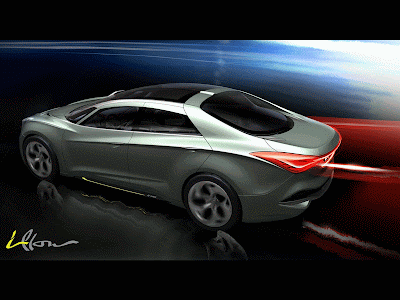
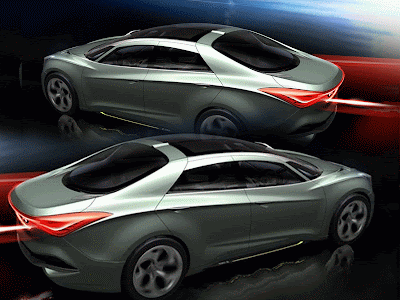
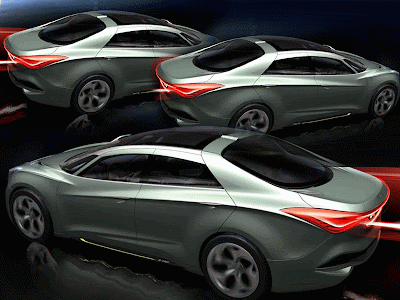
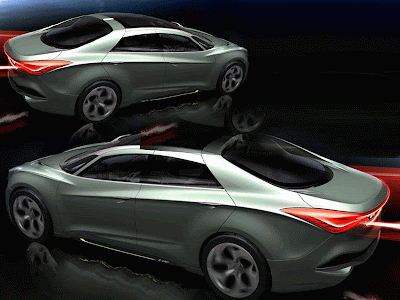
The Geneva Motor Show is quite generous in reveals this year, considering the trend of the automotive industry. Hyundai has just presented its new i-Flow Concept on the catwalk, continuing the company’s statement of developing a the “fluidic design”. As Hyundai continues to branch out into new segments, its European operation, which until recently has focused primarily on small cars, is debuting the Hyundai i-flow concept in Geneva. It's a vision of a coming Hyundai that's expected to do battle in Europe's larger D-segment.
2010 Hyundai i-Flow Concept Diesel-Electric Hybrid Powertrain
The i-flow is the latest concept to wear Hyundai's "fluidic sculpture" design language, and the large D-segment sedan wears it well. Hailing from Hyundai's European Design Headquarters in Russelsheim, Germany, the i-flow incorporates lightweight materials and solar cells from supplier BASF meant to reduce weight and increase energy efficiency.
2010 Hyundai i-Flow Concept Diesel-Electric Hybrid Powertrain
The i-flow is fitted with Hyundai's first-ever diesel hybrid drivetrain, in which a 1.7-liter diesel engine with dual-stage turbocharging is mated to Hyundai's Blue Drive hybrid system and a new six-speed dual-clutch gearbox. As we understand it, the i-flow is a parallel hybrid, allowing it to be powered by its lithium-polymer battery pack and electric motors, the diesel engine or a combination of both. Combined with a slippery 0.25 coefficient of drag, the i-flow will reportedly return 78.4 mpg and emit 0.30 grams of CO2 per mile.
2010 Hyundai i-Flow Concept Diesel-Electric Hybrid Powertrain
The new lines give an elegant avant-garde look, helping in the same time in reducing the CO2 emissions to 85g/km and improving its aerodynamics. In collaboration with chemical company BASF, Hyundai produced its first eco-friendly diesel hybrid powertrain, using high-technologies and next-generation materials. The new i-Flow combines perfectly the concept of a little-big car, as it shows a sporty looks but also provides quite enough space due to the use of a minimalistic design for the seats and center console.
2010 Hyundai i-Flow Concept Diesel-Electric Hybrid Powertrain
The high-tech engine presents the new 1.7-litre engine fitted with 2-stage turbocharging connected to a Lithium Ion-Polymer battery for a more efficient consumption, especially when driven i-flow’s six-speed, dual-clutch transmission. The i-Flow technology is a test bed for new energy harvesting ideas, ranging from flexible solar panel roofing to a thermo-electric generator which uses exhaust heat to produce power. More news of Hyundai’s star cars will be published in advance of the show and will be available on the stand.  The company’s press conference will take place in Hall 1 at 14:15 (CET) on Tuesday 2nd March  (2010).

Saturday, March 6, 2010

On a motor show in Geneva debuted concept car Hyundai

Concept car Hyundai

On a motor show in Geneva the debut of concept car Hyundai has taken place, promising to give representation how the new generation European Sonata will look. And though in the company do not specify in this model directly, there notice, that i-Flow — competitor Ford Mondeo, Citroen C5 and Volkswagen Passat.

Hyundai i-Flow <-> Hyundai Sonata

It is necessary to notice also, that at length of 4780 mm, to width of 1850 mm, to height of 1420 mm and wheel base of 2800 mm i-Flow it is practically identical on dimensions of last Sonata so, to sell both cars simultaneously to Koreans it is not meaningful.

So smooth, flowing lines can be found out and in interior registration. Short strokes are not present — long wavy bends last through all salon, from a control panel to doors and further to a luggage compartment. Furnish materials — the most hi-tech, allowing essentially to lower weight.

Concept car Hyundai i-Flow

Under a cowl the first is concealed hybrid a diesel engine-electric installation Hyundai consisting of the new 1,7-litre motor and system of a two-phasic turbo-supercharging, receiving a food from lithium-polymeric of storage batteries.
Occurrence of serial model is expected in 2011.

Related Posts: Hyundai

Wednesday, February 17, 2010

Hyundai will show in Geneva a prototype of a new sedan

Hyundai i-flow

South Korean company Hyundai has published the first image-tizer of the conceptual car i-flow which world premiere will take place on a motor show in Geneva, opening in the beginning of March of this year. As they say in a communique, Hyundai i-flow will give representation how the future serial sedan of a D-class will look.

Hybrid car by Hyundai

About a novelty while that in a car design modern workings out of concern BASF will be used is known only, including innovative easy materials of furnish and solar panels. At car creation in company Hyundai tried to lower as much as possible weight of the car and to achieve the best profitability. Under assumptions of some foreign editions, the concept car i-flow can be equipped by a hybrid power-plant.

New sedan Hyundai i-flow

When serial version Hyundai i-flow will appear on the conveyor, yet is not informed.

Related Posts: Hyundai

Sunday, December 27, 2009

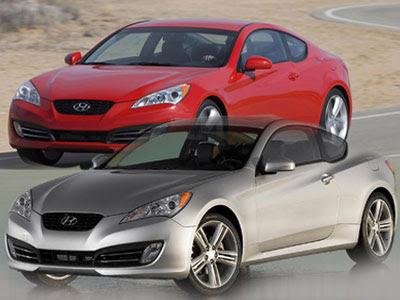
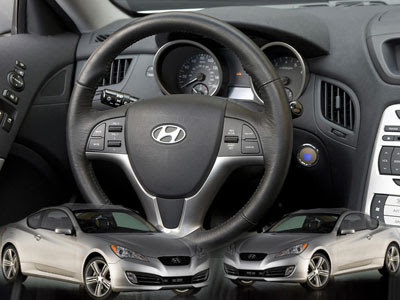
2010 Hyundai Genesis Sports Car Coupe with SHIFTRONIC to handle the additional torque

2010 Hyundai Genesis Sports Car Coupe

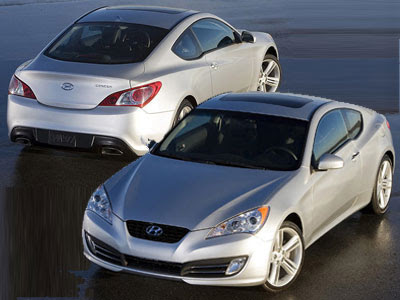
The people at South Korean automaker Hyundai are listening to their customers. The 2010 Hyundai Genesis Coupe, confirmed for production and a release early in 2009, follows the tradition of the 2009 Hyundai Genesis in offering a true high performance rear wheel drive, sporty architecture in an affordable package. The 2010 Genesis Coupe is a purpose-built rear-wheel drive sports coupe featuring two performance-focused engines - a212-horsepower 2.0-liter turbocharged four-cylinder engine and a range-topping all-aluminum 306-horsepower, DOHC 3.8-liter V6 engine.
2010 Hyundai Genesis Sports Car Coupe

Genesis Coupe employs a MacPherson strut dual-link front suspension and a five-link rear suspension setup. Both engines are mated to a standard six-speed manual transmission. The Genesis Coupe 2.0t (2.0-liter 4-cylinder turbo) offers an optional five-speed automatic with SHIFTRONIC® while the 3.8-liter V6 offers a ZF six-speed automatic transmission with SHIFTRONIC to handle the additional torque.
The Genesis Coupe follows the styling tradition set forth by the Hyundai Tiburon, but outdoes that aging Hyundai compact sports car in every way. The Genesis Coupe comes with an available naturally aspirated V6, sure to be a motor to find its way into more of Hyundai's lineup. The high output engine offers 310 horses on premium fuel. Following the introduction earlier this year of the rear-wheel drive Genesis sport sedan, Hyundai Genesis Coupe is Hyundai's most dynamic performance car ever and the second consecutive all-new model introduction from Hyundai appealing directly to the car enthusiast.
2010 Hyundai Genesis Sports Car Coupe

Hyundai Genesis Coupe uses the same flexible rear-wheel drive architecture originally developed for the Genesis sport sedan.
The 2010 Hyundai Genesis Coupe offers Xenon high-intensity discharge (HID) headlights. The advantages of HID headlamps include greater lighting power, daylight-type lighting and reduced power consumption. In addition, the cut lines of the new HID headlights are extremely precise, providing maximum nighttime visibility without distracting other drivers.
All Hyundai Genesis Coupe models feature standard four-channel ABS with Electronic Brake-force Distribution (EBD) to optimize brake performance under various dynamic loading conditions. The system also includes Brake Assist, which provides maximum ABS-level braking force when a panic stop is detected.
2010 Hyundai Genesis Sports Car Coupe

It is nice to see that Hyundai, an automaker currently enjoying growth and a solid reputation for producing mainstream-market cars that last, is making steps toward the sports car market. The styling of the Genesis Coupe is hit or miss, some will love it and others will wonder what Hyundai was thinking. But, with the sports car pedigree to back it up, the Genesis Coupe should be another worldwide hit for Hyundai.
2010 Hyundai Genesis Sports Car Coupe

The Hyundai Genesis Coupe is offered in three trim levels: the stylish and affordable GS, the premium-sport GT featuring the 3.8-liter V6, and the high-performance SE, available with either the 2.0-liter turbocharged four-cylinder engine or the 3.8-liter V6 engine.

Saturday, October 3, 2009

2010 Hyundai Sonata i40 Electric Hybrid Concept Car

2010 Hyundai Sonata i40 Electric Hybrid Concept Car

Hyundai
presented the next generation Sonata sedan, which is on the European market would be called i40.
2010 Hyundai Sonata gets a new platform and a different range of engines, which will include a series of turbo diesel “R” and the four-and six-cylinder petrol engines. It is also expected to modify the appearance of 228-strong hybrid that combines 2.0-liter turbo-charged (according to other sources - 2.4-liter) capacity of 30 kilowatt electric motor, lithium-ion batteries, and six-speed automatic transmission.
In the sale of novelty will appear early next year. According to some foreign publications in Europe, first to the market can go touring Hyundai i40, then hatchback, sedan and the hybrid version.

Sunday, July 12, 2009

Sedan Hyundai Genesis have equipped with the engine with a turbo-supercharging

Hyundai Genesis

Experts of American branch Hyundai together with tuners from studio RKSport equipped sedan Genesis with engine V8 with a strengthening supercharger.

The premiere of model has taken place on a motor show in Chicago. More powerful version of a sedan prepare for a batch production.

Power of turbo-engine V8 — 460 h.p., the twisting moment — 590 Nm. Coupling is disconnected by a supercharger on single turns or at movement with uniform loading. Also the unit has received system of partial switching-off of cylinders, and at the expense of it, the engine can be transformed from eight — in four-cylinder. Dispersal to 100 km/h for 4,9 seconds. For comparison, sports sedan Audi S6 is dispersed to 100 km/h for 5,2 seconds.

Related Posts: Hyundai

Wednesday, June 17, 2009

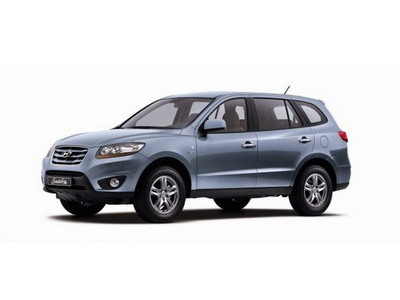
Updated Hyundai Santa Fe

Hyundai Santa Fe

Hyundai the ex-terrier of off-road car Santa Fe has updated and has prepared the new diesel engine for the car.

Outside of change are limited to slightly updated forward part with a new bumper and a radiator lattice, other lateral mirrors with the built in indexes of turn and new disks. The back bumper too was updated, as well as back lanterns.

In a ruler of power units there were new motors of series R: two turbodiesels in volume of 2,0 and 2,2 litres power of 184 and 200 h.p. accordingly. Both motors are aggregated new six-step by an automatic transmission.

The European version updated Santa Fe, most likely, will be presented on autoshow in Frankfurt in September of this year.

Related Posts: Hyundai